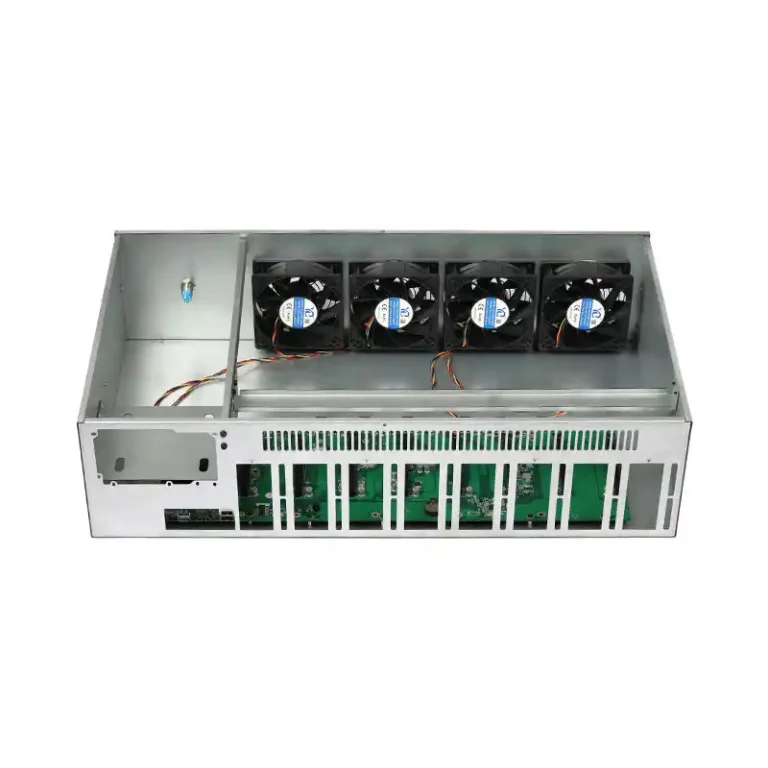
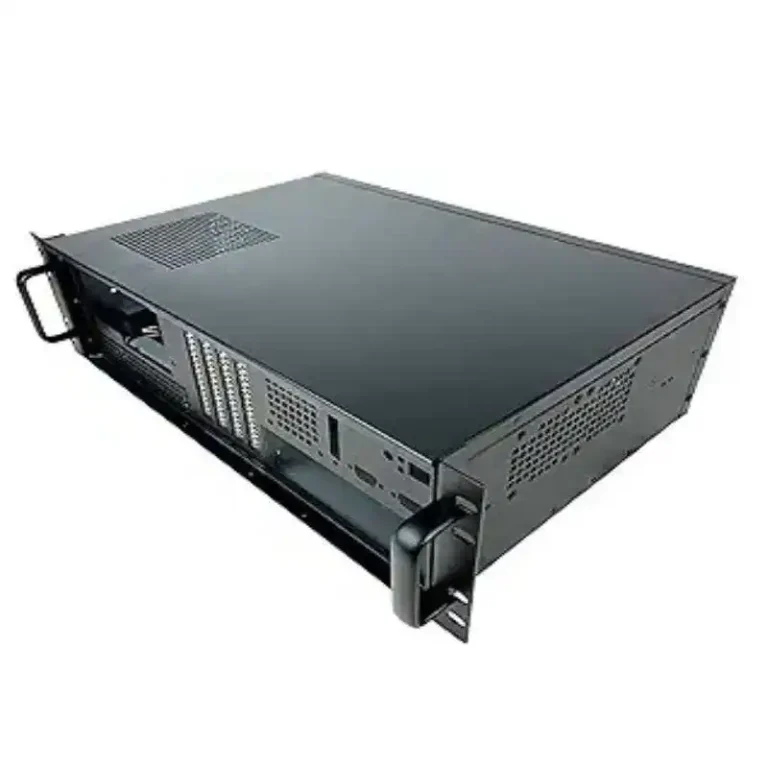
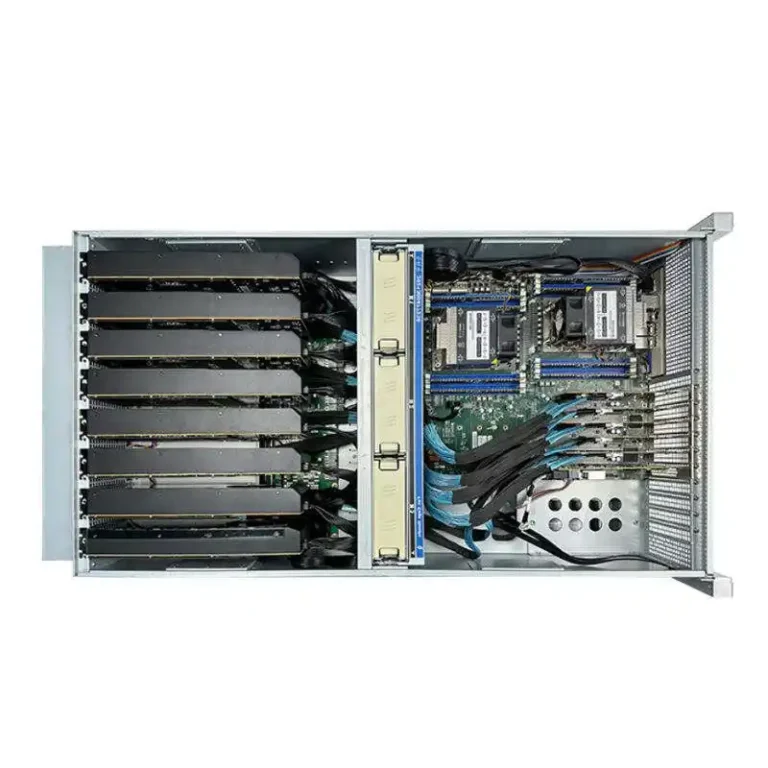
Running AI training, VDI, even video compute today, we all hit the same wall: how many rack units do we give to the GPU box so it can breathe, take power, and still be serviceable. 4U looks easy. 6U looks safe. 5U sits in the middle and people ignore it, but they shouldn’t. Below is a practical, slightly opinionated comparison, tied to the catalog on IStoneCase (the site already splits products into GPU Server Case, 4U GPU Server Case, 5U GPU Server Case, 6U GPU Server Case, so we can map real parts, not imaginary hardware).
1. Specification Table: 4U vs 5U vs 6U
| Item / Spec angle | 4U GPU Server Case | 5U GPU Server Case | 6U GPU Server Case |
|---|---|---|---|
| Height & rack fit | 7 in class, standard 19″ rack, good co-location with other boxes | Taller front, better airflow duct, still OK for 42U/48U racks | Tallest, needs deeper rack and better PDU/bus |
| GPU capacity (realistic) | 4–8 double-width, but 8 needs tight cooling | 8–10 GPUs or 1 HGX set, room for liquid loop or bigger PSU | 8 flagship GPUs + more PCIe/NVMe + N+1 fans |
| Cooling path | Front-to-back air, sometimes hybrid or coldplate add-on | Air + room for manifolds, easier to make fixed airflow wall | Air or full liquid, suitable for 20kW-level nodes |
| Power section | Redundant PSUs, but space is busy when CPU TDP is high | Bigger PSUs, easier cabling, safer for 8 GPUs | Highest PSU count, ready for ORV3 style power |
| Serviceability | Best, because it’s short and common | Good, fans and tubes more reachable | Heavy, fewer nodes per rack, but each node is “complete” |
| Typical workloads | Inference, render, mixed rack, labs | 8-GPU training, AI lab, video analytics with growing models | LLM training, data center AI pod, research cluster |
| IStoneCase refs | ISC GPU Server Case WS04A2 | — (fits the 5U product line on the site) | ISC GPU Server CaseWS06A |
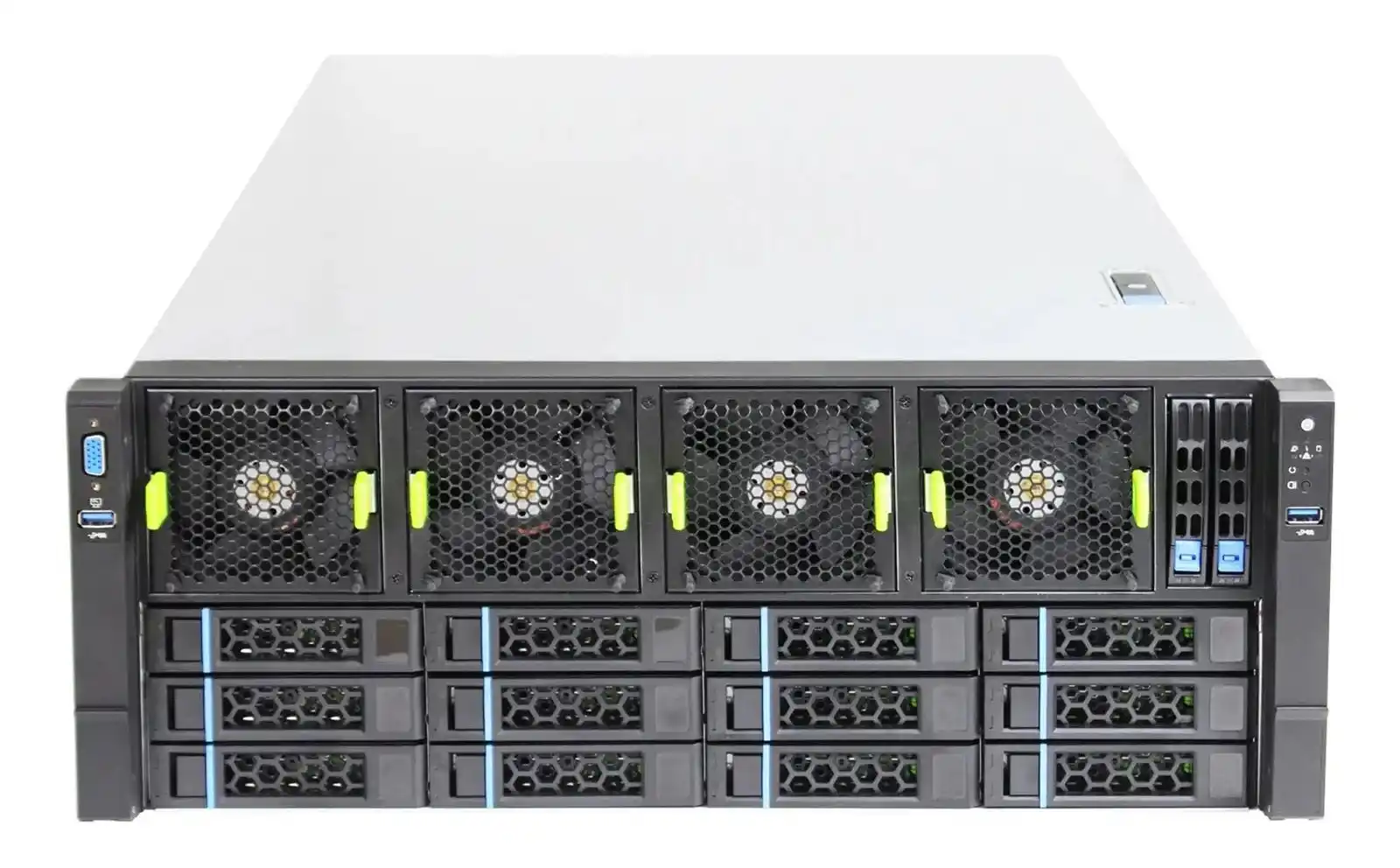
2. “4U GPU Server Case Specification and Real-World Scenarios”
4U is still the most deployable height. Most colos and on-prem racks accept it. If you run a small AI team, you often mix database boxes, a server rack pc case, a storage node, and one 4U GPU box. 4U plays nice with that.
Key points:
- 4U gives enough front space to build a straight airflow tunnel.
- It fits 4–8 GPUs, but at the 8-GPU end you really depend on fan wall + good cable management.
- For customers that just want “a computer case server for AI” and don’t want to change rack, 4U is the easy yes.
- You can start with air and later ask IStoneCase for minor liquid or coldplate work because they have Customization Server Chassis Service.
Scenario:
A 42U rack in a startup room, no rear door heat exchanger, just PDUs. They drop 4×4U nodes (training + inference mix), still have space for ToR switch and a storage server pc case. That’s why 4U lives long.
3. “5U GPU Server Case for High-Density AI Training Nodes”
Here is where people sometimes do wrong choice.
5U looks only “+1U” from 4U, but that extra space gives you three things:
- straighter, wider air channel for 8 hot GPUs
- bigger or more separated PSU area
- room for tubing / manifolds when customer wants partial liquid
So when you start putting full HGX / NVLink stacks or next-gen 1000W-class boards, 5U suddenly makes sense. That’s why IStoneCase keeps a separate 5U GPU Server Case category — you don’t create that if nobody asks.
Why 5U beats 4U here
- In 4U, when you push both CPU and GPU TDP, your fan RPM climbs, the noise goes up, and service guys hate it.
- In 5U, you can slow the fans a bit, keep the same thermal headroom, and still have space for front drives.
- 5U also makes front-maintenance and “pull-out to swap a card” less of a pain.
Use this angle in your article:
“5U is the practical height for AI training nodes where you want 8 GPUs, but you don’t want to go to a giant 6U/8U chassis yet.”
That line speaks to DC engineers.
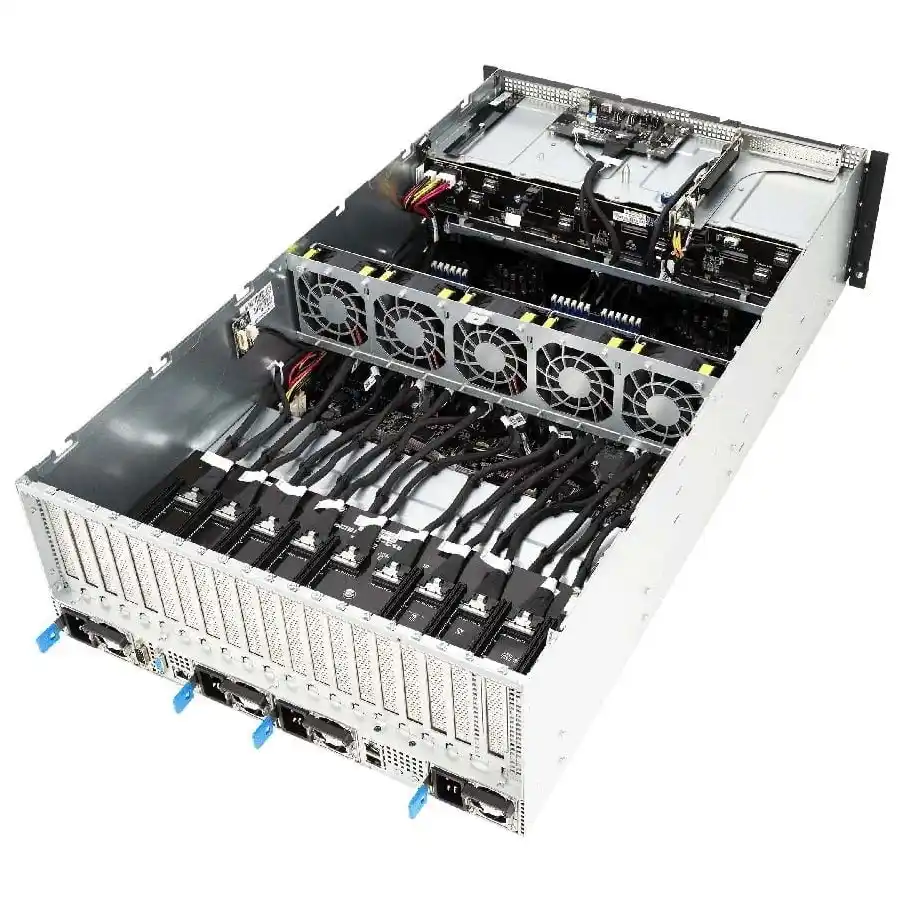
4. “6U GPU Server Case and Data Center-Level Cooling”
6U is not about “I need 8 GPUs”. 5U can do 8.
6U is about power envelope and serviceability at 20kW-ish node level (don’t write the exact watt if you don’t know customer’s spec). When you look at the IStoneCase 6U GPU Server Case and the specific ISC GPU Server CaseWS06A, you can see the pattern: deeper body, stronger front, more room for PSUs and cable trays.
What 6U buys you:
- space to separate hot GPUs, NICs, DPU, maybe even extra NVMe drawers
- easier adoption of direct-to-chip liquid (shorter, safer loop)
- room for N+1 or N+N PSU without crushing the airflow
- better access for technicians — important for batch buyers, not just maker guys
This is what big data centers, algorithm centers, research labs like. They don’t want to open 12 small boxes. They want to open 4 big ones.
5. “Product Mapping to IStoneCase Catalog”
This part is important for SEO and for real buyers reading you.
- 4U path → point to 4U GPU Server Case and the concrete model ISC GPU Server Case WS04A2. That’s your baseline for “we start with air, 4–8 GPUs, standard rack”.
- 5U path → point to 5U GPU Server Case when customer says “I need 8 GPU, high TDP, but don’t want monster chassis.”
- 6U path → point to 6U GPU Server Case and ISC GPU Server CaseWS06A for “flagship node, data center, AI pod, liquid”.
- Custom / OEM / ODM → always leave door open to Customization Server Chassis Service for one-off cooling layout, different rail kit, or special front panel.
You can also drop keywords like server rack pc case, server pc case, computer case server, atx server case around these links, because buyers sometimes don’t know the right industry term and just search the generic one.
6. “Conclusion: Choose by Rack, Power, Cooling, Serviceability”
Don’t pick U-height by gut. Pick it by where you will run it:
- Have ordinary rack, want quick deploy, want to mix with other gear → 4U.
- Know you will run 8 GPUs hard, want quieter thermals, want wider airflow → 5U.
- Go to 20kW-class node, liquid, high PCIe count, want to open the box without swearing → 6U.
IStoneCase is good here because it doesn’t just sell one fixed box. It sells a ladder: 4U → 5U → 6U → OEM. That matches how DC people really buy: start small, scale, then freeze the spec.