Selling a server chassis is nice. Keeping it running in a rack at 2 a.m. is what makes (or breaks) the relationship.
If you ship globally, after-sales isn’t “customer support.” It’s an operations engine. It controls MTTR, protects SLAs, and keeps channel partners from turning your warehouse into their dumping ground. And when you’re dealing with GPU-heavy builds, storage nodes, or edge installs, the pressure goes up fast. One loose rail, one bent bracket, one weird vibration… suddenly the whole rack is “unstable,” and you’re in a war room.
That’s why your RMA (Return Material Authorization) setup needs a real model, not vibes.
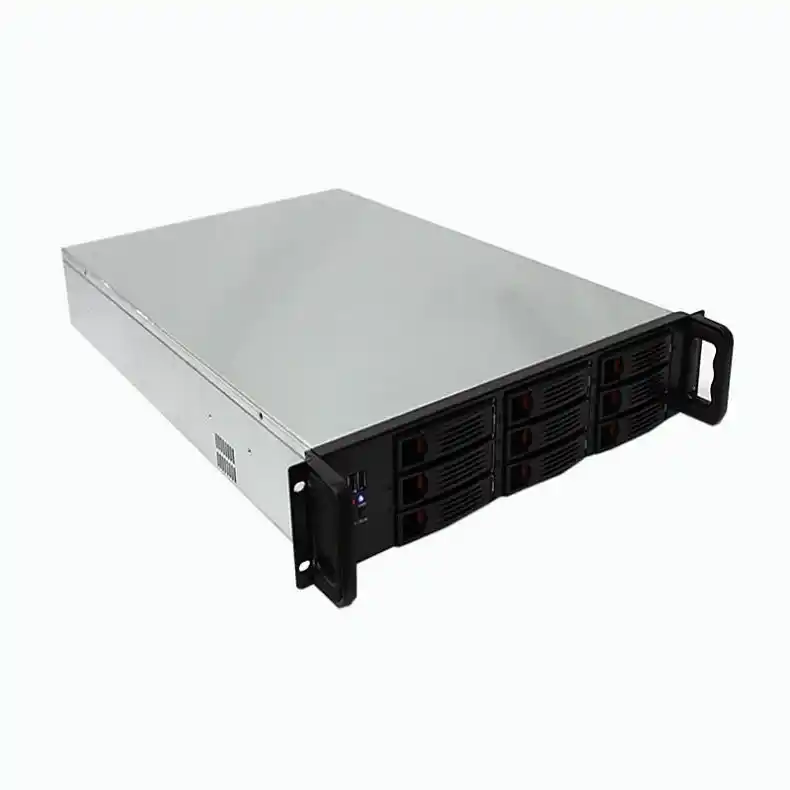
Also, if you’re sourcing chassis at scale—server rack pc case, server pc case, computer case server, atx server case—you want an OEM/ODM partner that understands service reality. IStoneCase sits in that lane with product lines like GPU Server Case, Server Case, Rackmount Case, Wallmount Case, NAS Case, ITX Case, and Chassis Guide Rail—plus OEM/ODM customization and bulk programs. That combo matters when you’re building a repeatable after-sales playbook.
Argument 1: Define RMA and outcomes (repair, replace, credit)
Start simple: RMA is permission + tracking.
Without an RMA number, returns become random boxes with mystery issues. With it, every return lands in a defined lane:
- Repair: you fix it and return it
- Replace: you swap the whole unit or swap a module (FRU)
- Credit: you accept the return and issue credit (usually DOA / wrong spec)
This sounds basic, but it prevents 80% of the chaos. If you don’t define it, the customer will define it for you. And their version is always “replace everything, right now.”
Argument 2: Decide service strategy during product development (NPI)
A lot of teams design the chassis first, then “add service later.” That’s like building a race car and then asking where the brakes go.
During NPI, lock down service decisions like:
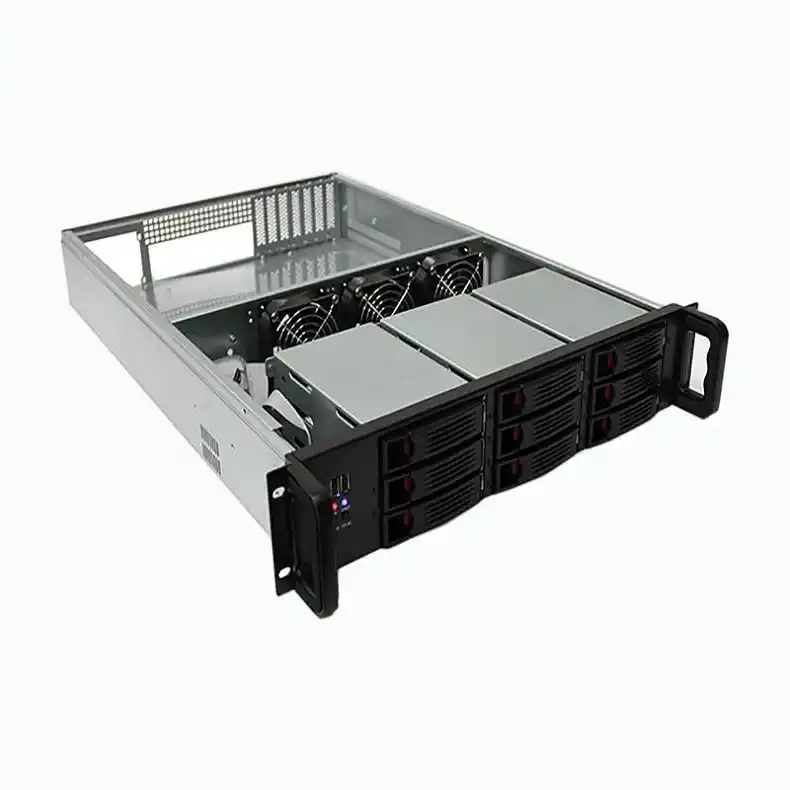
- What’s an FRU (fan wall, backplane, I/O board, PSU bracket, rails kit)
- What’s field-swappable vs depot-only
- What you’ll keep as spares (and where)
- How you’ll label parts (serials, revision tags, batch trace)
If you do this early, you reduce RMA volume later. Not zero, but less pain. And you’ll avoid silly stuff like: “We can replace the fan, but the fan is riveted behind the GPU tray.” Oops.
Argument 3: Advance Cross-Ship / Advanced Exchange reduces downtime
For serious accounts, the real KPI is uptime. Not “we replied quickly.” Uptime.
So you’ll see Advance Exchange / Cross-Ship in global OEM programs:
- Customer reports a failure and requests RMA
- You approve and ship a replacement unit/module ASAP
- Customer ships the suspect unit back inside an agreed return window
This is a huge win for AI clusters and data centers because it cuts downtime. But don’t run it loose. You need:
- serial tracking
- return window rules
- clear “unreturned unit” penalties (not fun, but necessary)
Real use-case: a training cluster runs weekend jobs. A fan module fails Friday night. Depot repair is too slow. Cross-ship keeps the queue moving.
Argument 4: Return-for-Credit (DOA / wrong spec) needs guardrails
Return-for-credit is useful. It’s also easy to abuse.
Common channel problems:
- “DOA” that’s actually install damage
- “Wrong spec” that’s actually a bad PO
- “Missing parts” because someone opened the box and forgot what they took
So you set guardrails:
- short claim window
- “must be complete” rules (accessories, rails, screws, packaging)
- inspection pass/fail criteria
- restocking terms for non-defective returns
It sounds strict, but it keeps the program healthy. Otherwise your after-sales team turns into a free cleanup crew. Nobody wants that job, trust me.
Argument 5: Depot Repair + refurb pools close the quality loop
Depot repair is not sexy. It’s how you scale.
A solid depot flow looks like:
- intake → triage → repair → burn-in test → ship-back
- capture failure codes + photos + notes
- feed patterns back to engineering (root cause / CAPA)
When you add a refurb pool, you unlock faster swaps without burning new inventory each time. You grade units like:
- repaired + tested
- refurb-ready for replacement
- scrap / vendor claim
Industry truth: the fastest teams don’t “repair a chassis.” They swap modules. Fan wall out, fan wall in. Backplane swap. Done. Less drama.
Argument 6: Last-mile on-site service supports strict SLA accounts
Some customers will not ship anything back. They want service on-site, period.
That’s where last-mile field service shows up:
- local partner replaces unit or FRU on-site
- you pre-position spares (regional buffer)
- you document everything (because audits are real)
This is common in:
- colocation sites
- enterprise data centers
- edge deployments (shipping delays, customs, remote locations)
Wallmount and edge setups get spicy here. Nobody wants to unmount a computer case server from a wall cabinet just to “send it back.” If you plan FRUs and access points early, field service becomes possible. If not, it’s pain city.
Argument 7: Pre-authorization and triage prevents NFF and margin leaks
NFF = No Fault Found. It’s the quiet profit killer.
Bad RMAs often come from:
- wrong rails depth
- power issues in the rack
- airflow blocked by cable mess
- “it rattles” (because it wasn’t seated)
So you build a triage gate before approving RMA:
- ask for photos of install + labels
- confirm rack depth + rail kit
- confirm symptom and reproduce steps
- request logs if there’s a controller involved
This keeps the return pipeline clean. And yeah, it protects your sanity too.
Also—rails matter more than people admit. A shaky install turns into “hardware failure” very fast. If you sell rails as a matched kit (like a proper Chassis Guide Rail), you reduce “false RMAs” a lot.
Argument 8: OEM/ODM contracts turn RMA into measurable KPIs
If you do OEM/ODM business, after-sales needs to be contract-grade. Not “we’ll try.”
Write KPIs into agreements:
- RMA issuance time
- turnaround targets (TAT)
- defect reporting format (root cause + corrective action)
- warranty boundaries (what’s covered, what’s not)
- packaging rules (to reduce transit damage)
This turns arguments into process. It also keeps your channel calm, because everyone knows the rules before anything breaks.
RMA model comparison table for global server chassis OEM
| RMA model keyword | Customer gets | You must have | Best fit | Pain it fixes |
|---|---|---|---|---|
| Standard RMA (repair / replace / credit) | one clear lane + tracking | RMA workflow, intake checks, test benches | most B2B programs | stops random returns |
| Advance Exchange / Cross-Ship | faster recovery | spare pool, serial control, reverse logistics | AI racks, data centers | uptime pressure, MTTR |
| Return-for-Credit (DOA / wrong spec) | quick closure | claim window rules, condition checks | distribution, bulk buys | DOA disputes, wrong PO |
| Depot Repair | scalable fixes | SOP, burn-in, QA gates | global coverage | consistent repair quality |
| Refurb Pool | fast swaps | refurb pipeline, grading | high volume SKUs | shortages, lead time stress |
| Last-mile on-site service | minimal disruption | partner network, regional buffer | strict SLA accounts | “no ship-back” customers |
| Third-party RMA ops | coverage without big team | vendor mgmt, KPI dashboard | new regions | thin local footprint |
Contract control points table for RMA KPIs
| KPI keyword | Define this clearly | Why it matters |
|---|---|---|
| RMA issuance time | when you release the RMA number | prevents stalled logistics |
| Turnaround Time (TAT) | repair/replace timeline rules | controls escalation loops |
| Fault analysis report | root cause + CAPA expectations | reduces repeat failures |
| Warranty boundaries | covered vs excluded conditions | avoids endless arguing |
| Packaging + labeling | how to ship and label RMA | cuts transit damage + loss |
| Spare plan | FRU list + regional buffer idea | makes cross-ship possible |
Practical scenarios for server chassis after-sales
- Scenario A: GPU training rack
A GPU node runs hot, a fan wall fails, alarms go off. Cross-ship a fan module, customer swaps it, cluster stays alive. If you can’t do that, they’ll call you “slow” forever. It’s harsh but true. - Scenario B: Storage / NAS fleet
A small enterprise buys a batch of NAS units. One arrives damaged, they want credit. Your guardrails decide if this ends in one email or fifteen emails. A clean NAS Case line with consistent packaging and accessories helps here. - Scenario C: Edge wallmount install
A wallmount node is deployed in a cramped closet. It fails. Nobody wants to unmount it, re-cable it, and ship it. Field-swappable parts and simple access panels make this survivable. A Wallmount Case designed with service access in mind saves weeks of frustration. - Scenario D: “atx server case” for SMB and lab builds
SMBs and research groups often mix parts. They’ll blame the chassis first. Your triage script matters. Ask the right questions, and half the RMAs disappear, like magic (not magic, just basics).
Where IStoneCase fits in an after-sales + RMA system
If you want after-sales that doesn’t explode at scale, your chassis partner has to think like ops, not just like manufacturing. That usually means:
- consistent SKU structure across families
- FRU-friendly layouts (serviceable, not trapped parts)
- rails and accessories that match real racks
- OEM/ODM customization that doesn’t break serviceability
- bulk programs with stable revisions (no surprise swaps)
That’s the kind of practical backbone you want behind a global RMA model. And it’s why teams sourcing Rackmount Case or GPU Server Case at volume usually care about after-sales design from day one.