Downtime is expensive.
According to the Uptime Institute’s Annual Outage Analysis 2024 executive summary, 54% of operators said their last significant outage exceeded $100,000 and 16% crossed $1 million, and power issues keep showing up as the most common cause of serious and severe data center outages—which means your “redundant” design is either doing the job or actively lying to you.
So why do teams still treat a redundant power supply as a checkbox?
I’m going to be blunt: the industry overpays for “1+1 PSU redundancy” hardware, then underinvests in the boring integration work—contact resistance, airflow margin, load-sharing policy, and the firmware/telemetry plumbing that tells you a module is dying before it faceplants. That’s how you end up with two shiny hot-swappable redundant PSU modules and one single point of failure: the backplane or the server chassis power distribution board.
And yes, it happens in big facilities too. In February 2024, Reuters reported on Applied Digital’s Ellendale outage that started on January 18 and became a complete outage by January 19—utility “stability” upgrades were still in progress, and the company said revenue would be materially impacted.
If a data center can go dark over power-path instability, what do you think a cramped 1U box does when a PSU browns out and the backplane arcs?
The intent behind the search (and what you should be optimizing for)
When someone types “integrating redundant power supplies in 1U/2U server chassis” or the blunter “How to integrate redundant power supplies in a 1U/2U server chassis,” they’re not shopping for a logo badge. They want a playbook: how to wire A/B feeds, how to mount a redundant PSU backplane, how to validate hot-swap behavior, how to read PMBus, and how to avoid the classic trap where both PSUs fail “together” because the chassis design couples them.
Short version: this is operational engineering, not parts shopping.
What “redundant power supply” actually means in 1U/2U
Three words: independent power paths.
In a real 1+1 configuration, either PSU must carry the full load (or at least the defined critical load) while the other is absent, failed, or being swapped, and the switchover can’t depend on an unprotected PCB trace that runs through one connector block with bargain spring contacts. You’re designing for MTTR (mean time to repair) measured in minutes, not hours.
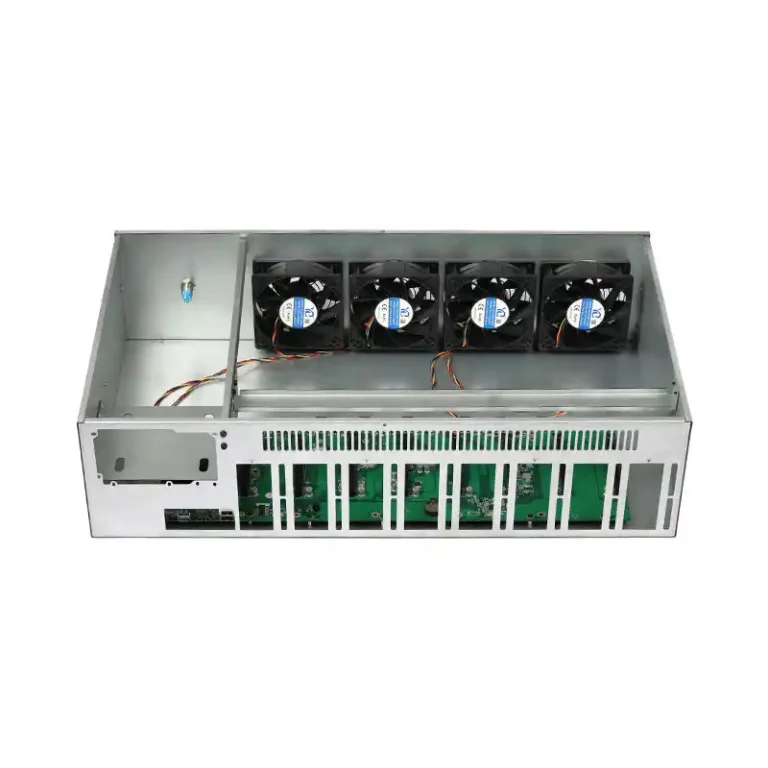
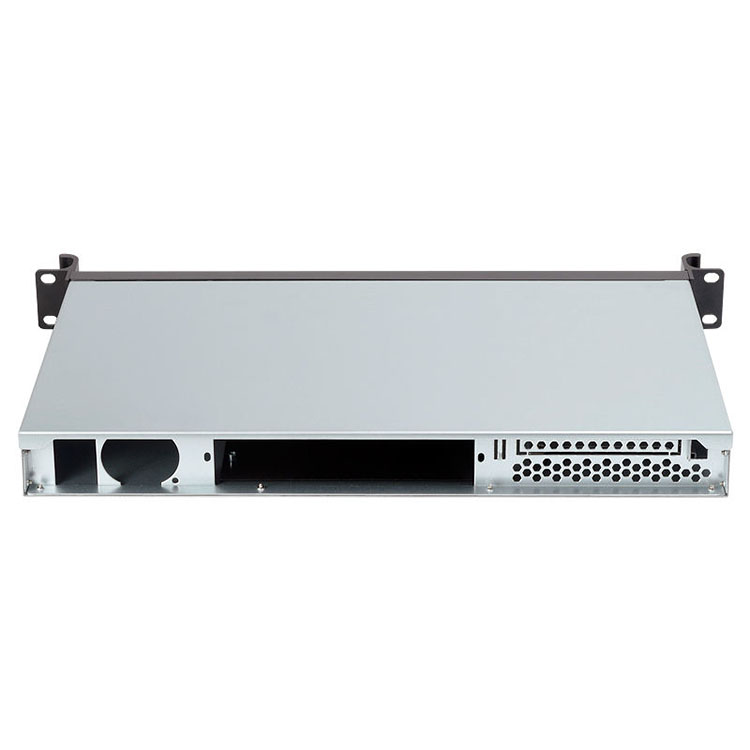
Here’s where the chassis matters. A 1U chassis often forces you into 1U-specialized PSUs, shorter harnesses, tighter bend radii, and less heatsink mass; a 2U redundant PSU setup gives you more room for CRPS modules, a thicker copper backplane, and sane airflow channels.
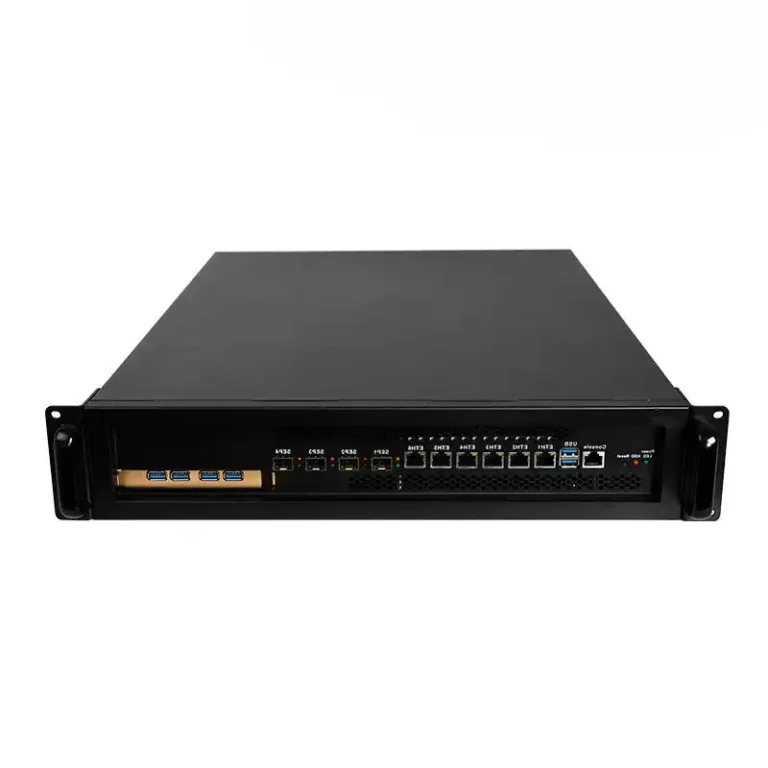
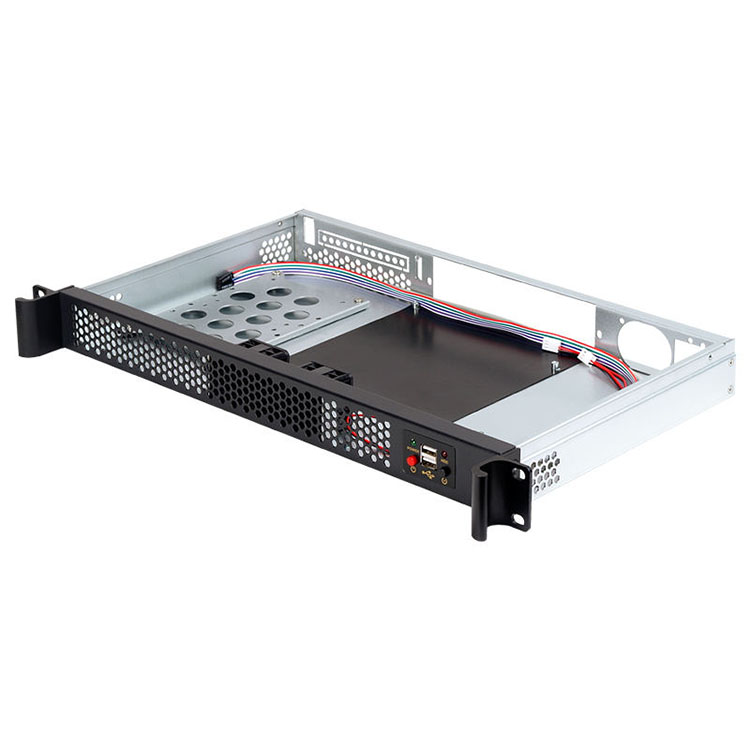
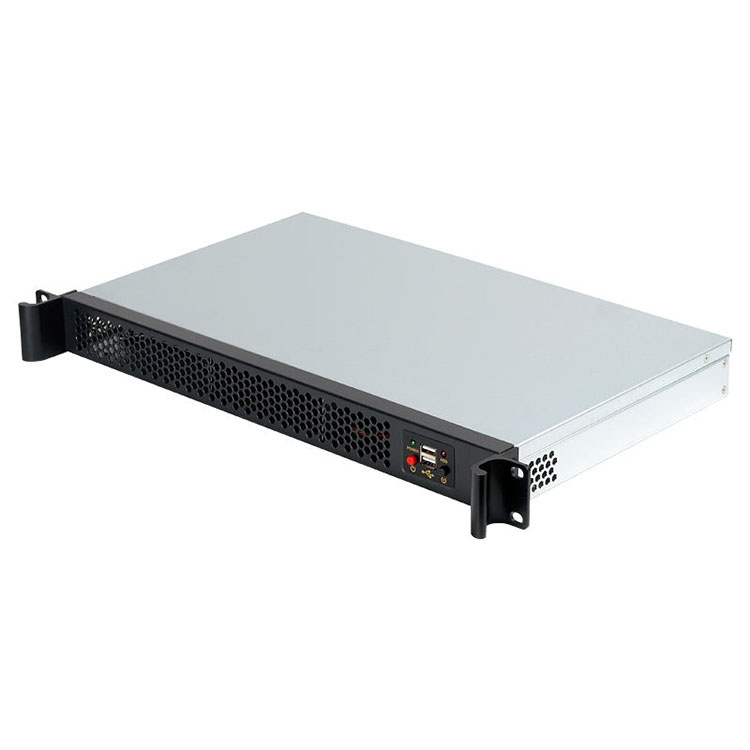
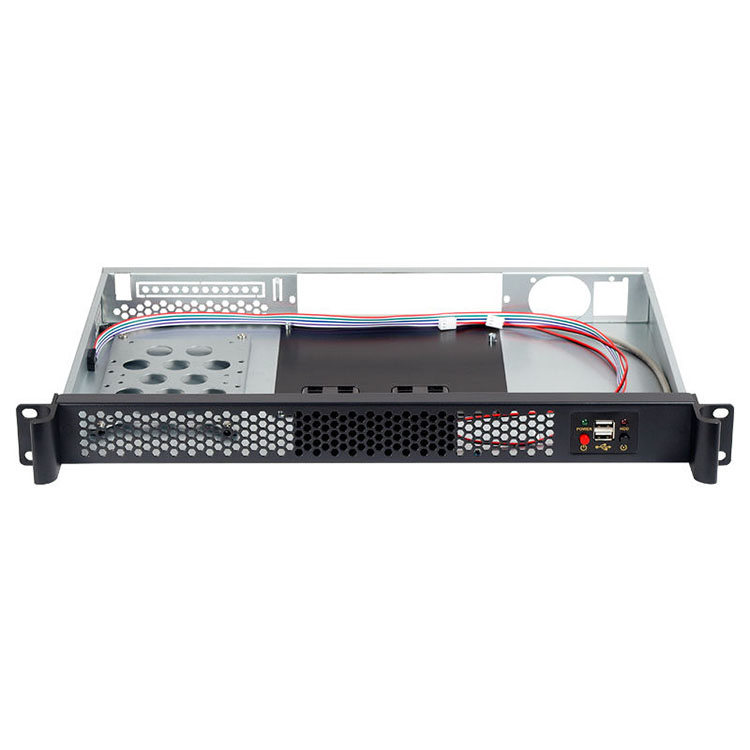
If you’re picking hardware: start with chassis that are explicit about redundant PSU support, not vague marketing. Integrators lean on category pages like a cheat sheet because they show what’s physically supported—see the 1U server case options that support dual redundant power supplies and the broader 2U server case lineup built for rack environments.
The hard truth about backplanes: they fail like any other board
Backplanes are not magical. They’re PCBs with copper, plating, and connectors that are forced to carry high current at low voltage, and that combination is unforgiving.
Typical failure modes that recur in teardown photos and RMA summaries:
- Connector wear + micro-arcing: repeated hot-swap cycles, minor misalignment, and you get pitting, then heat, then runaway.
- Underbuilt copper: “2 oz Cu” versus “1 oz Cu” isn’t a boutique choice at 12 V and 80–120 A; it’s the difference between a warm board and a cooked one.
- Bad sense wiring: remote sense lines (and their return) routed like an afterthought, causing the PSU to overcompensate under load steps.
- Thermal debt: 1U airflow is brutal; a backplane sitting in a stagnant pocket behind drive cages sees elevated ambient and ages faster.
If you want a concrete chassis example: the ISC-SC278S-H25-T calls out compatibility with CRPS redundant power supply modules and a 12Gb/s MiniSAS-HD backplane with protections; that tells me the design team thought about backplane integration as a first-class feature, not an accessory. Link for specs: 2U chassis compatible with CRPS redundant PSU modules.
Electrical integration checklist that most teams skip
Good integration is repetitive. That’s why people skip it. And that’s why outages repeat.
1 Input side: treat A/B like adults
- Use two separate PDUs (A and B), ideally two separate upstream circuits, and label them like your on-call life depends on it.
- Validate input ranges: many high-wattage units want 200–240 VAC and IEC C19; 120 VAC labs love to discover this at 2 a.m.
- If you’re chasing efficiency, remember 80 PLUS Titanium hits its best numbers around ~50% load; oversized PSUs running at 10–15% can be less efficient and noisier.
2 Output side: design the current path, not the schematic
- Keep the 12 V bus short, wide, and mechanically secured; at 12 V, a few milliohms is a heater.
- Use proper OR-ing / ideal-diode control where appropriate (especially when mixing sources), and don’t assume the PSU’s internal OR-ing matches your chassis topology.
- If the chassis uses a server chassis power distribution board (PDB), hunt for single-point failures: one 5VSB converter, one logic rail for PS_ON#, one trace feeding both fan headers, one “clever” ground pour that becomes a fuse.
3 Telemetry: PMBus is the early warning system
A PMBus redundant power supply that can report VIN, IIN, POUT, temperature, fan RPM, and fault history gives you pre-failure signals: rising fan current, increasing internal temperature at constant load, or a module that’s “sharing” less every week. That’s the difference between a scheduled swap and a surprise reboot.
If you need the chassis view of this: the ISC-R166-4-M 1U server case with redundant power supply support is the kind of spec sheet I like because it’s explicit about form factor (482×660×44.5 mm) and the constraints you’re actually integrating inside.
1U vs 2U: the integration trade nobody wants to price correctly
A 1U redundant power supply design is a discipline problem: you’re trading away airflow, connector spacing, and service ergonomics, and you’re betting you can win it back with tighter mechanical tolerance and better monitoring.
A 2U redundant PSU design is a margin problem: you have space to do it right, but teams often fill that space with more drives, more risers, more cables—and then act surprised when the hot-swap path is blocked by a bundle tie.
Pick your poison.
Comparison table: common redundant PSU integration patterns
| Pattern | Typical hardware | Hot-swap behavior | Common failure point | Where it fits |
|---|---|---|---|---|
| 1U “dual redundant” | 1U-specialized PSUs + backplane | Usually yes, but clearance-sensitive | Backplane connector wear; airflow starvation | Tight racks, edge nodes, telecom shelves |
| 2U CRPS modules | 2× CRPS + redundant PSU backplane | Yes, tool-less module swap | Backplane copper/OR-ing; mis-set load-share policy | Storage, virtualization, mixed PCIe |
| Single ATX “big PSU” | 1× 1–3 kW ATX | No | Single PSU, single input, single fan path | Labs, dev rigs, cost-min builds |
| Dual ATX + sync board | 2× ATX + load-split board | Sometimes (but ugly) | Not redundancy—device-level loss on one PSU | Only when you accept partial shutdown |
| ORv3 rack power | 48 V shelf + node converters | Yes at rack level | Converter stage, rack bus protection | Clusters, AI pods, high-density racks |
If you’re living in the 2–3 kW world, don’t guess—read the tradeoffs laid out in redundant 2–3 kW PSU options for multi-GPU workloads, especially the warning that “two-PSU split load is not redundancy.”
The bigger backdrop: power stress is rising, and it shows up inside the rack
Here’s the uncomfortable macro point: your chassis-level redundant power supply decisions are colliding with grid-level constraints. In December 2024, the U.S. Department of Energy summary of the LBNL data center energy report stated that data centers used about 4.4% of U.S. electricity in 2023 and are projected to reach roughly 6.7%–12% by 2028, with total data center electricity use estimated to rise to 325–580 TWh by 2028.
When supply is tight, power quality events don’t get rarer; they get messier.
So, redundancy inside a 1U/2U server chassis isn’t only about “a PSU died.” It’s about riding through ugly input, keeping conversion stable, and preventing your own protection circuitry from tripping first.
FAQs
What is a redundant power supply in a 1U/2U server chassis?
A redundant power supply in a 1U/2U server chassis is a dual-module PSU system (often 1+1 or N+1) designed so the server can keep running at its rated load when one PSU is removed, fails, or is hot-swapped, using a shared backplane or power distribution board that manages load sharing, OR-ing, and fault isolation.
After that definition, the practical test is simple: pull one module under a real workload (say, a 70–90% synthetic load) and confirm the box doesn’t reboot, the fans stay sane, and the logs show a clean failover event.
What is 1+1 PSU redundancy?
1+1 PSU redundancy is a configuration where two identical power supplies are installed so either one can carry the entire server load alone, while the second supply shares load or remains in standby, and the system continues operating if one module fails, is unplugged, or is replaced during operation, assuming the backplane and input feeds are independent.
If your “1+1” requires both PSUs to be present to avoid OCP trips, you’ve built a fragile dual-supply system, not redundancy.
What is a redundant PSU backplane?
A redundant PSU backplane is a high-current PCB and connector assembly that accepts hot-swap modules, isolates and combines their DC outputs for load sharing, and distributes rails like 12 V and 5VSB plus control signals (PS_ON#, PWR_OK) so one module can be removed without shutting the server down.
Treat it like a wear item: inspect it, monitor temperatures, and don’t cheap out on contact quality.
What is PMBus on a redundant power supply?
PMBus on a redundant power supply is a digital management interface (typically PMBus 1.2/1.3 over I²C/SMBus) that exposes real-time measurements and fault logs—voltage, current, power, temperature, fan speed, and event history—so operators can verify load sharing, predict failure, and set alerting thresholds before a PSU trips or silently de-rates under heat.
If you’re running without PMBus telemetry, you’re flying blind and calling it “high availability.”
Is using two ATX PSUs with a sync board real redundancy?
Using two ATX PSUs with a sync board is a load-split wiring trick where each supply powers a subset of components, so a single failure usually kills its half and can destabilize the rest; it is not true 1+1 redundancy because one PSU typically cannot carry the full system load cleanly.
If you need uptime, use a purpose-built redundant PSU backplane or CRPS design and validate hot-swap behavior.
Conclusion
If you’re designing a 1U/2U box and want redundancy that survives real-world power ugliness, start with chassis that are explicit about redundant PSU support and serviceability—browse the 1U server case category for compact redundant PSU builds and the 2U server cases suited to CRPS and higher current paths, then spec the backplane and PMBus plan before you pick wattage.
And if you want someone to sanity-check your layout, airflow, and A/B feed plan before you buy metal, request a quote and engineering review through ISTONECASE’s chassis pages.