Home → Dual-Node Server Case → Applications
Dual-Node Server Case Applications
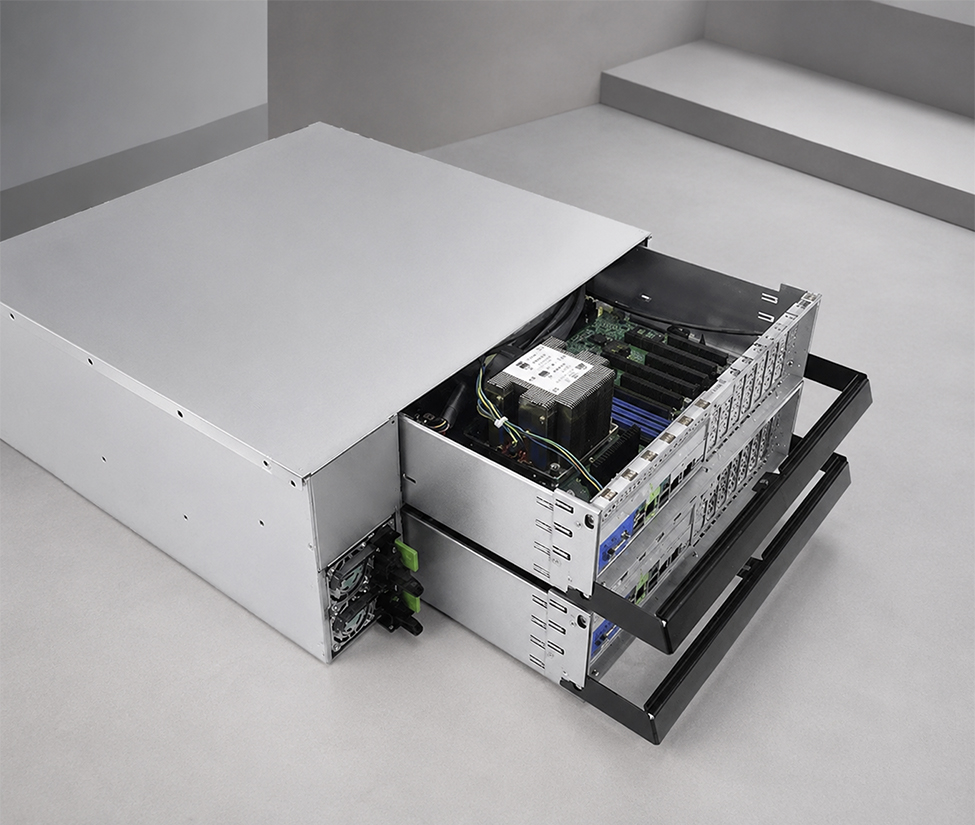
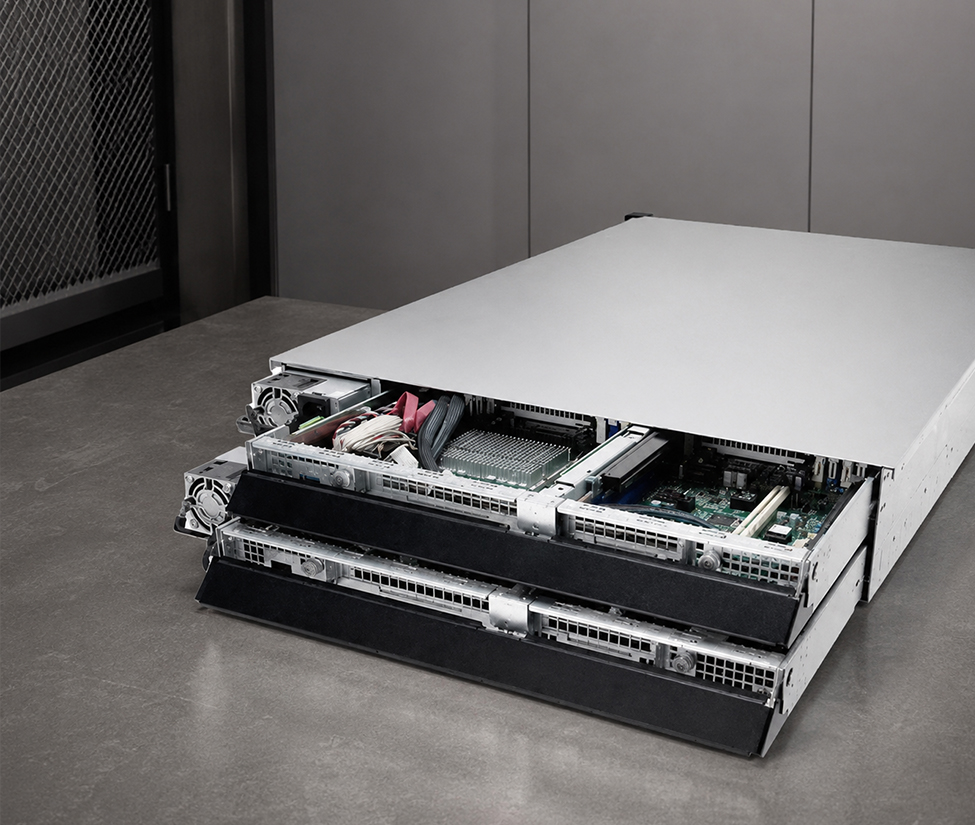
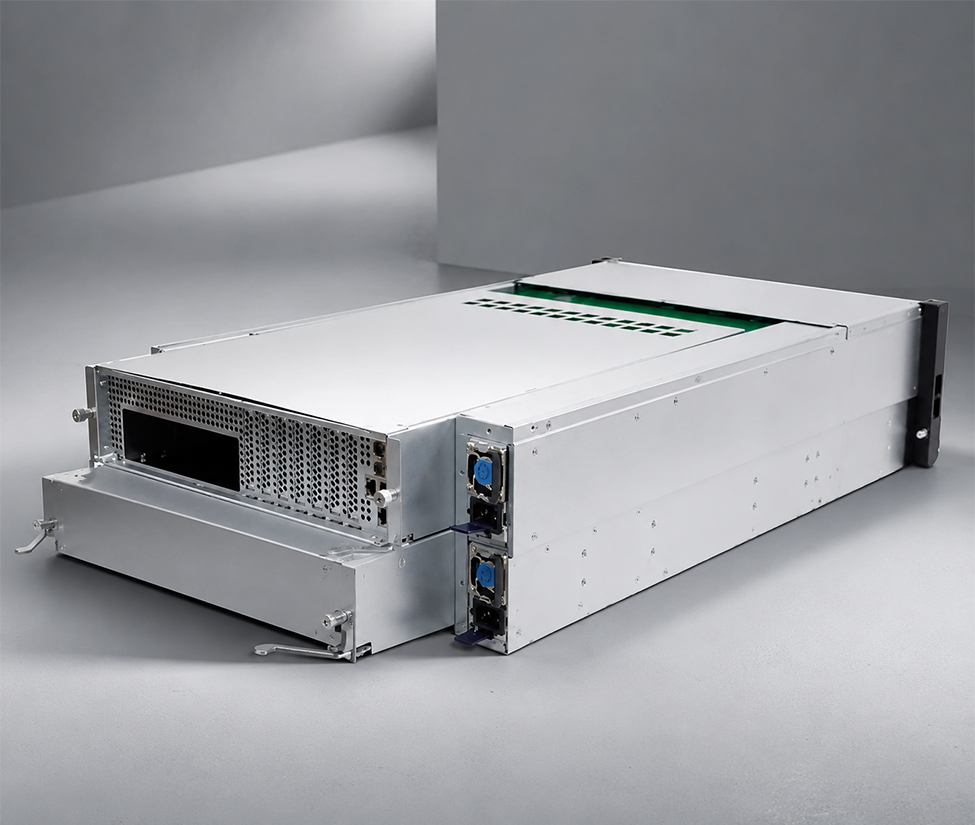
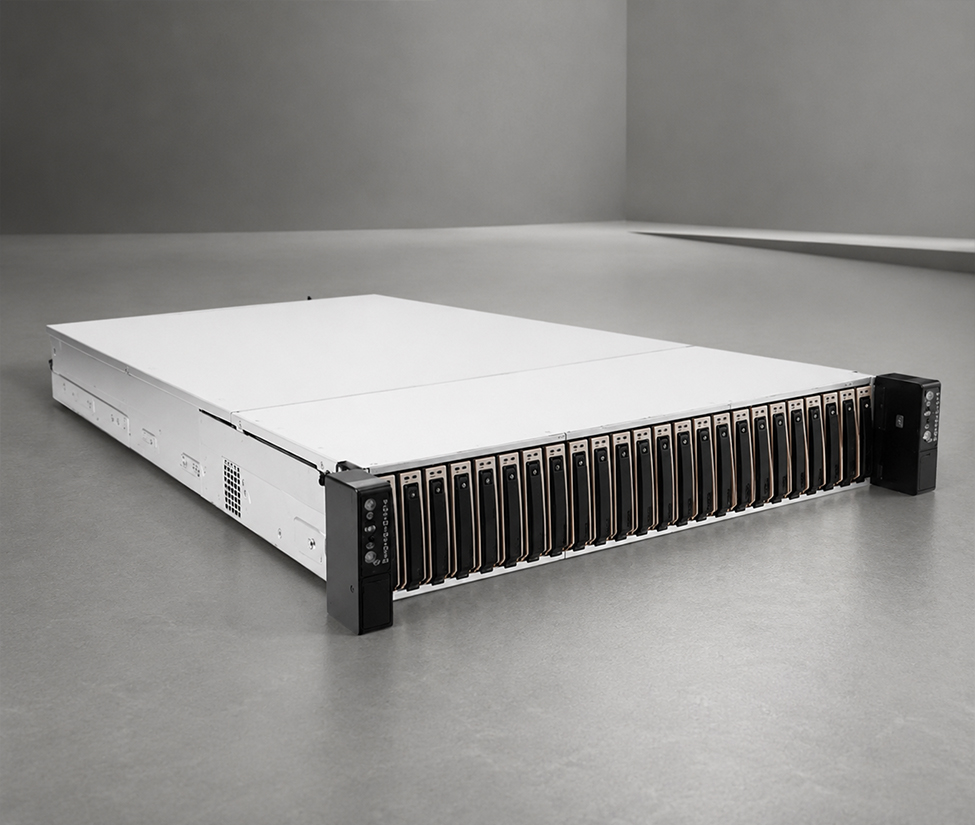
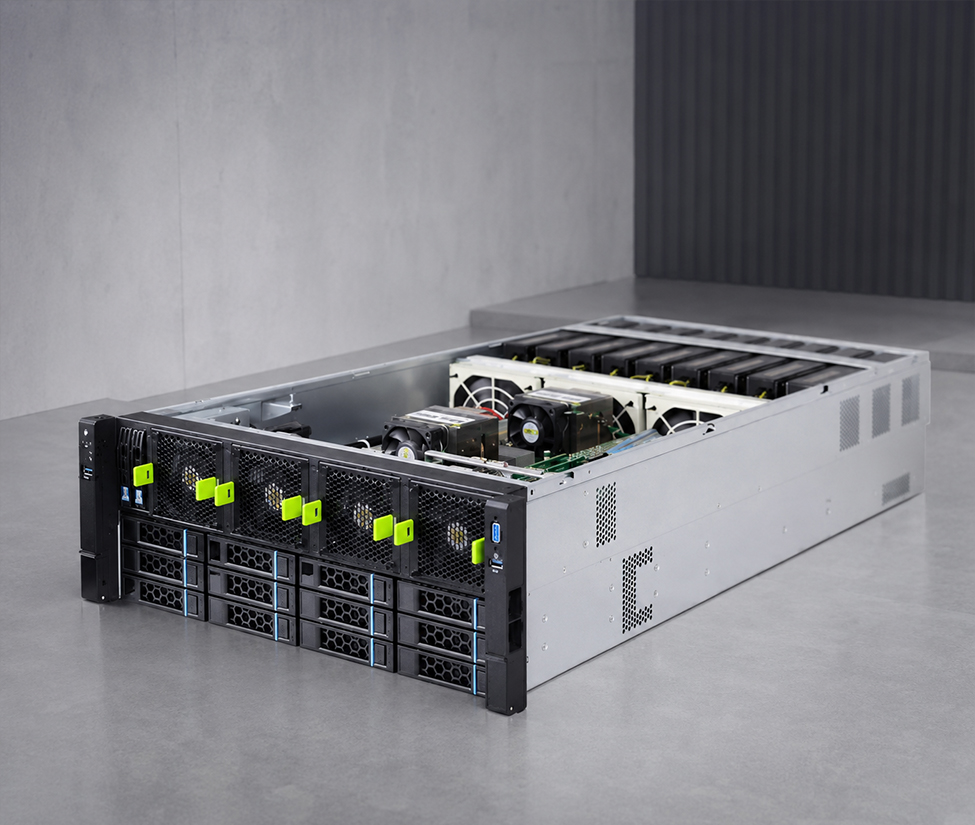
Dual-node chassis pack into one enclosure to raise rack density and reduce shared infrastructure cost. Use these to match your workload to airflow zoning, PCIe expansion, drive layout, and service workflow.
Overview
- more compute per rack and fewer chassis touchpoints.
- fewer rails, labels, and chassis SKUs to stock.
- node-level access can reduce MTTR.
- predictable power behavior, PCIe clearance, and cooling margin.
Applications / Use Cases
HPC Clusters & Batch Compute Farms
Pain points
- Rack space is expensive; every U matters.
- Cabling/labeling grows with node count.
- Cooling margin shrinks in dense rows.
Requirements
- Two-node density without thermal hotspots.
- Repeatable service workflow for fleets.
- Clean front-to-back airflow path.
Key metrics
- Per-node airflow zoning + fan wall.
- PSU headroom for sustained CPU load.
- Depth fit + rear cable bend radius.
Recommended configuration
- 2U/4U dual-node chassis for dense compute.
- High static-pressure fans + baffles.
- Rails matched to cabinet depth and load.
Virtualization & Private Cloud (VM/Container Hosts)
Pain points
- Host sprawl increases operational overhead.
- PCIe lane pressure complicates NIC/storage plans.
- Per-host costs rise with fleet growth.
Requirements
- Two independent nodes per chassis for density.
- PCIe expansion per node for NIC/HBA.
- Fast swap workflow for rails and fans.
Key metrics
- PCIe clearance (LP/FH) and slot count.
- Thermal stability at high utilization.
- Front access and node isolation.
Recommended configuration
- Dual-node chassis with per-node PCIe options.
- Front-to-back airflow + easy fan service.
- Redundant PSU for always-on platforms.
High-Availability Storage (Dual Controller / SDS Nodes)
Pain points
- Need HA without doubling chassis footprint.
- Drive rebuilds raise temps under sustained writes.
- Backplane/HBA cabling can get complex.
Requirements
- Drive bay density with stable drive-zone cooling.
- Node independence for failover and maintenance.
- PCIe for HBA/RAID/NIC as required.
Key metrics
- Bay count + SATA/SAS planning.
- Airflow across drive rows during rebuilds.
- PSU sizing for spin-up + controller load.
Recommended configuration
- 4U dual-node storage chassis with hot-swap bays.
- Separated I/O routing to keep airflow clean.
- Redundant power for critical retention.
Edge Micro Data Centers (Branch / Factory / Remote Sites)
Pain points
- Limited rack space and limited onsite staff.
- Dust/heat increases failure rates.
- Need redundancy in one footprint.
Requirements
- Depth fit for shallow cabinets where needed.
- Service-friendly access for fans and nodes.
- Clean cable routing to protect airflow.
Key metrics
- Depth constraints + rail compatibility.
- Filter/service access for dust control.
- Node-level MTTR and indicators.
Recommended configuration
- Dual-node chassis for redundant edge services.
- Front service access + simple cleaning.
- Pair with GPU chassis if inference is required.
Lab, CI/CD & Dev/Test Consolidation
Pain points
- Many small servers create clutter and noise.
- Frequent rebuilds need fast service workflows.
- Shared racks need predictable thermals.
Requirements
- Two nodes in one chassis to simplify layout.
- Accessible internals for rapid swaps.
- Easy fan access and cleaning.
Key metrics
- Noise profile and fan control strategy.
- Open → service → close time.
- Spare parts standardization.
Recommended configuration
- Dual-node chassis with accessible fan modules.
- Rails for safe pull-out service.
- OEM/ODM tweaks for labels and airflow.
Selection Checklist
| Cooling | Fan wall capacity, hot aisle stability, thermal margin at full CPU load, fan service access. |
|---|---|
| Airflow | Per-node airflow zoning, baffles between nodes, cabling that doesn’t block intake/exhaust. |
| PCIe | Slots per node for NIC/HBA/accelerator, clearance (LP/FH), riser compatibility if applicable. |
| Power | Redundant vs single PSU, per-node power budget, headroom for PCIe + storage spin-up. |
| Drive bays | Hot-swap vs fixed, bay count, backplane strategy (SATA/SAS), cabling plan per node. |
| Motherboard | Node form factor support, I/O alignment, CPU cooler clearance, service access to each node. |
| Depth | Rack fit, rear cable bend radius, clearance for servicing on rails. |
| Rails | Load rating for heavier builds, compatibility with cabinet depth ranges. |
| Maintenance | Independent node access, fast fan replacement, clear indicators, spare parts strategy. |
FAQ
1) What is a dual-node server case?
A dual-node server case is a chassis that houses two independent server nodes in one enclosure, helping increase rack density and simplify deployment compared to two separate chassis.
2) When does dual-node make sense vs two single-node chassis?
Dual-node fits when density and standardized rollout matter. Two separate chassis can be better when you need strong isolation, different thermal profiles, or separate physical placement.
3) How should I plan cooling in a dual-node chassis?
Prioritize per-node airflow zoning, a strong fan wall, and unobstructed front-to-back airflow. Confirm fan service access and thermal margin for sustained CPU loads.
4) Do both nodes get PCIe expansion?
Many designs support PCIe expansion per node, but counts and clearance vary. Validate slot type, riser compatibility (if used), and card length/height needs.
5) Can dual-node chassis be used for high-availability storage?
Yes. Plan bay density, backplane interface, and airflow across drive rows during rebuild operations, plus PCIe for HBA/RAID/NIC where needed.
6) What power options are typical?
Options include shared redundant PSUs or single PSU designs. Size for CPU load, PCIe cards, and storage spin-up if drives are included.
7) What details should I send for a recommendation?
Share target U height, node motherboard type, CPU/TDP, PCIe cards (NIC/HBA/accelerator), storage bay needs, rack depth limits, and ambient temperature.
8) What OEM/ODM changes are common?
Common requests include airflow baffles, rail kits, node bay labeling, I/O placement tweaks, and serviceability improvements for fans and node modules.