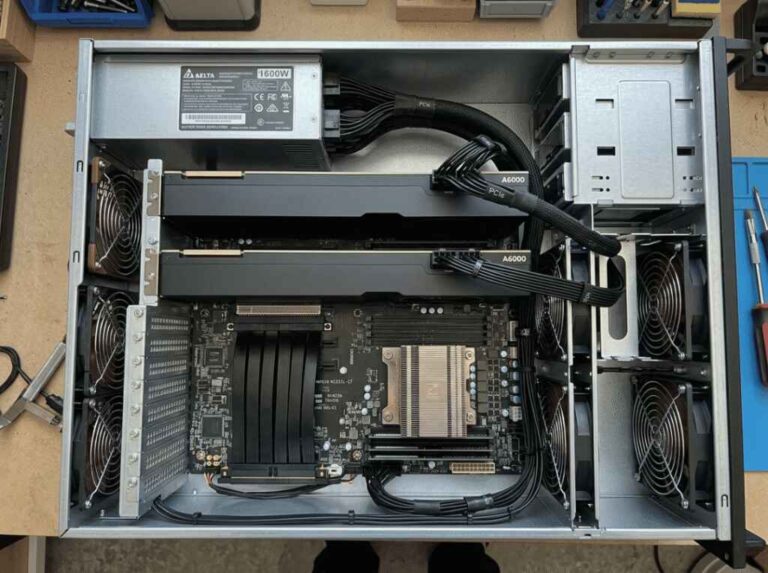
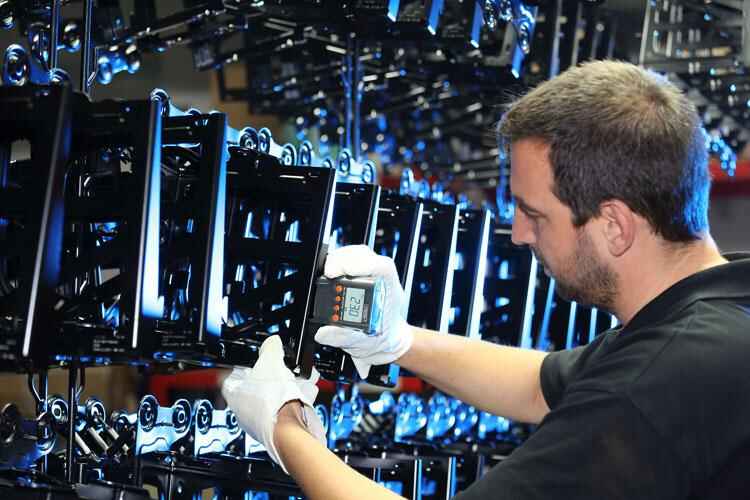
저희와 상담해 보세요 서버 섀시 엔지니어 및 영업팀




구독자 24,000명
사용 목적, 섀시 유형, 랙 높이, 마더보드, GPU, 드라이브 베이, 전원 공급 장치, 냉각 시스템, I/O 및 주문 수량을 알려주십시오. 당사의 엔지니어 및 영업팀이 귀사의 프로젝트에 적합한 표준 모델 또는 OEM/ODM 구성을 추천해 드리겠습니다.

A supplier finishes 1,000 server chassis.
The purchasing team asks for a pre-shipment inspection. Someone writes “AQL 2.5” in an email, an inspector checks a sample, the report says PASS, and everybody relaxes.
I wouldn’t.
Because “AQL 2.5” by itself does not tell me enough to know whether the inspection was meaningful. What inspection level was used? Which revision of the drawing? How were critical, major, and minor defects classified? Were units selected randomly across the finished lot? Were dimensions actually measured? What happens if the sample exceeds the rejection number?
Those details determine whether an AQL inspection protects the buyer or merely produces a nice-looking PDF.
AQL is probabilistic.
An AQL sampling inspection does not prove that every chassis in a shipment is conforming; it uses a statistically defined sample and predetermined acceptance criteria to make a lot-level decision while balancing inspection effort, producer risk, and buyer risk across repeated production lots.
So why do so many purchasing teams still treat an AQL PASS as a certificate saying, “Every unit is good”?
That misunderstanding is where this discussion needs to start.
AQL inspection is an acceptance-sampling method used to decide whether a production lot should be accepted or rejected after inspecting a statistically determined sample rather than every individual unit.
The current international reference is ISO 2859-1:2026, published in January 2026 as Edition 3. ISO describes it as a system of acceptance sampling plans for inspection by attributes, indexed by Acceptance Quality Limit, with normal, tightened, reduced, skip-lot, and switching concepts.
That 2026 date matters.
I still see quality articles referring to ISO 2859-1:1999 as though it were the current edition. It isn’t. ISO lists the 1999 edition as withdrawn and the 2026 edition as the published version.
For U.S.-oriented procurement, ANSI/ASQ Z1.4 remains another widely used reference for attribute inspection. ASQ describes Z1.4 as an acceptance-sampling system using normal, tightened, and reduced inspection plans for percent nonconforming or nonconformities per 100 units.
The basic logic is straightforward:
That sounds mechanical.
그렇지 않습니다.
For a server chassis order, most inspection failures begin before the inspector ever opens a carton.
This is probably the most persistent AQL misunderstanding in manufacturing.
If a buyer writes:
Major defects: AQL 2.5
that does not simply mean:
“Up to 2.5% of the inspected chassis may be defective.”
The AQL is an indexing parameter used with the sampling plan.
The sample size comes from factors such as:
The applicable AQL then determines the Ac/Re threshold associated with that sample plan.
NIST’s Engineering Statistics Handbook describes acceptance sampling as selecting a random sample from a lot and using the sample to decide whether the entire lot should be accepted or rejected. It also distinguishes AQL from LTPD and explicitly discusses producer’s risk and consumer’s risk. NIST’s acceptance-sampling guidance is worth reading because it makes the statistical purpose far clearer than many factory inspection templates do.
Consider an order containing 1,000 finished rackmount chassis.
Under a commonly used normal single-sampling configuration based on General Inspection Level II:
In practical terms, if the specified plan gives Ac 5 / Re 6 for major defects:
For the minor category at Ac 7 / Re 8:
The exact plan should always be confirmed against the standard edition and inspection agreement actually referenced in the purchase contract rather than copied blindly from an online AQL chart.
| Inspection Item | Illustrative Setting | 의미 |
|---|---|---|
| Production lot | 1,000 chassis | Units submitted together for acceptance |
| Inspection severity | Normal | Starting condition for routine production |
| General inspection level | II | Common general-purpose level |
| Sample size | 80 chassis | Randomly selected units inspected |
| Major AQL | 2.5 | Used to determine major-defect Ac/Re limits |
| Major Ac/Re | 5 / 6 | Accept at 5 or fewer; reject at 6 or more |
| Minor AQL | 4.0 | Used to determine minor-defect Ac/Re limits |
| Minor Ac/Re | 7 / 8 | Accept at 7 or fewer; reject at 8 or more |
| Critical defects | Buyer-defined zero-acceptance rule | Frequently handled as Ac 0/Re 1 where appropriate |
This table is an example of how a plan may be structured, not a substitute for the licensed/current ISO or ANSI/ASQ tables.
This is where generic AQL templates become dangerous.
A shirt, an injection-molded toy, and a 4U GPU chassis should not use the same defect checklist simply because all three are inspected under an AQL system.
The sampling mathematics may be transferable.
The engineering criteria are not.
Before placing a production order, buyers should define quality requirements in the complete chassis RFQ rather than waiting until the final inspection to decide whether something is “bad enough” to reject. Your RFQ should identify drawing revisions, materials, tolerances, finishes, installed hardware, critical dimensions, inspection records, packaging requirements, and acceptance criteria.
A critical defect is normally one that creates an unacceptable safety, regulatory, or severe functional risk.
Depending on the chassis configuration, examples might include:
For many purchasing programs, critical defects use a zero-acceptance rule.
I prefer that language over pretending every safety issue belongs neatly inside the same AQL percentage table.
Some failures should not be averaged away.
Major defects usually affect assembly, function, installation, reliability, interchangeability, or intended use.
For server chassis, I would look closely at:
A chassis can look beautiful and still be unusable.
That happens.
Minor defects generally involve workmanship or appearance without materially preventing the product from performing its intended function.
Examples could include:
But buyers need to define cosmetic zones.
A 15 mm scratch hidden underneath a rackmount chassis may be minor.
The same scratch across a branded front bezel might be commercially unacceptable.
Context wins.
This is the part procurement teams sometimes dislike hearing.
AQL does not define what a good chassis is.
It only provides a method for sampling against requirements that must already exist.
If your drawing says nothing about:
then an inspector cannot magically infer your engineering intent.
This is why I consider the CAD-to-production prototype process part of quality planning rather than merely product development.
Prototype validation should determine what matters before the sample plan is written.
The production inspector should not be discovering for the first time that a 2 mm hole shift stops a GPU retention bracket from fitting.
A disciplined server chassis production inspection is more structured than “open cartons and look for scratches.”
The inspector needs the same controlled documents that production used.
That normally means:
This connects directly to engineering change control before production.
If production is making Rev. C while QC is checking Rev. B, your AQL mathematics is irrelevant.
You are measuring the wrong product.
A lot should represent an identifiable production population.
Mixing unrelated revisions, factories, materials, or production periods into one artificial “lot” destroys traceability.
예를 들어
PO: 2,000 chassis
Model: RC4U-Project-A
Drawing revision: Rev. C
Production period: August 12–18, 2026
Material: 1.0mm SGCC
완료: black powder coating
Lot: 2,000 finished units submitted together
Now the sampling decision has a defined population.
Not “the factory chooses the nicest 80.”
Randomly.
NIST’s guidance is explicit about drawing a sample randomly from the lot before making the accept/reject decision.
And government procurement practice offers an even stronger real-world example.
The U.S. Defense Logistics Acquisition Directive’s Part 46 quality-assurance provisions require random selection of production-lot test samples in specified circumstances. Under its production-lot testing provisions, if a PLT sample fails, the entire production lot from which the sample was taken can fail.
That is not an AQL rule for commercial server chassis.
But it exposes an important principle: the credibility of lot acceptance depends on the sample actually representing the lot.
If the supplier stages 80 “inspection units” beside the QC table before the inspector arrives, I consider the sampling procedure compromised.
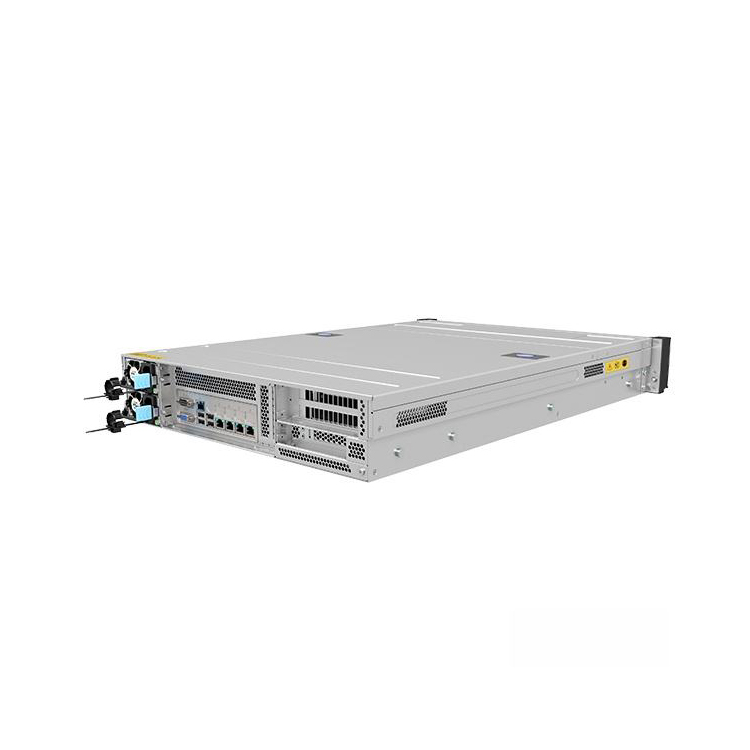
Each sampled chassis should be inspected for the relevant workmanship criteria.
Typical checks include:
AQL works particularly naturally with these attribute-based pass/fail observations.
Here is another hard truth.
I would not measure every dimension on every sampled chassis.
That sounds rigorous but often wastes inspection time on dimensions that have almost no effect on the system.
Instead, identify Critical-to-Quality dimensions, or CTQs.
For a rackmount server chassis, these might include:
This distinction should already be established during custom server chassis OEM/ODM engineering, where the enclosure is developed around the motherboard, cooling, storage, expansion, power, I/O, and service requirements rather than treated as an empty sheet-metal box.
Dimensional inspection does not replace assembly verification.
I have a strong opinion here: if a component interface can be cheaply verified using the actual mating component or a controlled fixture, do it.
A caliper tells you the hole is 6.0 mm from nominal.
A real rail tells you whether the chassis goes into the rack.
Possible functional checks include:
For standard projects, buyers can also compare configurations against the site’s server chassis product platforms before defining custom inspection requirements.
This distinction matters commercially.
AQL inspection answers:
“Based on this sampling plan, should I accept this lot?”
It does not answer:
“Does this lot contain zero defective units?”
Those are different questions.
NIST describes acceptance sampling as a middle-ground approach between no inspection and 100% inspection. Historically, destructive testing made that logic obvious: if testing destroys the product, testing every unit would leave nothing to ship.
Even where chassis inspection is nondestructive, the economics still matter.
Imagine inspecting 5,000 chassis and spending only four minutes per unit.
That is:
5,000 × 4 minutes = 20,000 inspection minutes
or roughly:
333 labor hours
And four minutes is nowhere near enough for a serious dimensional, cosmetic, packaging, and functional inspection.
Sampling exists for a reason.
AQL is not some informal China-sourcing trick.
Regulated product documentation contains concrete examples of statistical acceptance criteria.
하나 FDA 510(k) submission for nitrile examination gloves documented testing under a Multiple Normal GII AQL 2.5 plan with a sample size of 80, an acceptance number of 5, and rejection number of 6 for the reported water-leak testing.
Different product.
Different technical requirement.
Same important lesson.
The inspector does not simply calculate “2.5% of 80.”
The plan supplies an acceptance and rejection rule.
That is what procurement teams need to understand.
Suppose a supplier proposes:
Critical: 0
Major: AQL 2.5
Minor: AQL 4.0
That can be a reasonable starting structure.
But it should not become factory religion.
Consider these two failures:
Defect A: tiny powder-coat blemish underneath the chassis.
Defect B: rack-ear holes shifted far enough that the chassis cannot mount correctly.
Calling them both simply “defects” destroys useful information.
I would rather spend time writing precise defect definitions than negotiating whether a generic AQL should be 1.5 or 2.5.
The classification system controls what gets counted.
If classification is vague, the resulting statistics merely make ambiguity look scientific.
Another common mistake is asking final inspection to do work that should have happened during manufacturing.
AQL is primarily an acceptance decision tool.
It should not replace:
ASQ explicitly describes acceptance sampling as useful for protecting against continuing processes whose average quality deteriorates and isolated lots with excessive nonconformances, but acceptance sampling is not the same thing as controlling the manufacturing process itself.
A factory that keeps producing bad chassis and hopes final AQL inspection catches them is running quality backward.
Inspection is a gate.
Process control is prevention.
You need both.
This needs to be agreed before the PO is issued.
Not after the inspector finds six major defects.
Typical responses can include:
Do not automatically inspect another 80 units until you get a PASS.
That is statistical shopping.
If the original plan says the lot fails at Re 6 and you found six qualifying major nonconforming units, the result is a failed inspection.
What happens next must follow the agreed corrective-action and reinspection procedure.
AQL systems are more sophisticated than one static table.
The current ISO 2859-1:2026 framework includes switching rules between different inspection states. ISO specifically notes normal, tightened, reduced, and skip-lot concepts in describing the standard.
That makes sense.
A supplier producing twenty clean lots in succession should not necessarily be treated exactly like a supplier whose previous three shipments failed.
Conversely, repeated failures should trigger increased scrutiny.
For ongoing server chassis programs, I would track:
Now AQL becomes part of supplier-performance management rather than a one-time shipping ritual.
A useful report should contain evidence, not just a green PASS icon.
At minimum, I would expect:
And for important dimensions, I prefer actual numbers.
Not:
Dimension: PASS
Give me:
Specification: 482.6 ±0.5 mm
Unit 01: 482.4 mm
Unit 02: 482.7 mm
Unit 03: 482.5 mm
Data can be reviewed later.
A checkbox cannot.
My response:
Which standard, edition, inspection level, severity, defect category, sample plan, and Ac/Re limits?
“AQL 2.5” is incomplete.
No.
The sample needs to represent the lot. Random selection is a foundational assumption behind acceptance sampling.
Also no.
A perfect inspection against Rev. B tells you almost nothing if Rev. C is the production release.
A cosmetic scratch and a mounting-interface failure do not carry the same risk.
Define the taxonomy before inspection.
그렇지 않습니다.
Acceptance sampling deliberately involves statistical risk. NIST describes both producer’s risk—the risk of rejecting a lot at acceptable quality—and consumer’s risk—the risk of accepting a lot at an undesirable quality level.
Anyone promising that sampling eliminates those risks has misunderstood sampling.
For a recurring production program, I would put something like this into the quality agreement:
Final production inspection shall follow the mutually agreed acceptance-sampling plan based on the specified edition of ISO 2859-1 or ANSI/ASQ Z1.4. Lot definition, inspection level, severity, sample size, AQL values, Ac/Re criteria, defect classifications, CTQ dimensions, functional checks, packaging requirements, and reinspection procedures shall be approved before production release. Samples shall be selected randomly from completed production.
Then attach the actual defect criteria.
Because one sentence saying “AQL 2.5 required” is not a quality agreement.
It is an invitation to argue later.
AQL inspection for server chassis production is a statistical lot-acceptance method in which a predetermined number of randomly selected chassis are checked against approved drawings, workmanship standards, dimensions, functional requirements, packaging specifications, and defect limits to determine whether the entire production lot should be accepted or rejected.
It is normally used because inspecting every chassis to the same depth can be expensive and time-consuming. The sampling plan should specify the governing standard, inspection level, severity, AQL values, defect classifications, sample size, and Ac/Re limits.
AQL 2.5 is an acceptance-quality-limit index used with a defined sampling plan to establish the applicable acceptance and rejection numbers for a defect category; it does not simply mean that exactly 2.5% defective chassis are automatically permitted in either the inspected sample or the shipped production lot.
The lot size and inspection level first help determine the sample size. The AQL is then used with the applicable sampling table to establish the acceptance criteria.
The number of server chassis inspected is determined by the lot size, selected inspection level, inspection severity, sampling scheme, and governing standard rather than by the AQL percentage alone, so two production orders using the same AQL value can require different sample sizes when their lot sizes or inspection levels differ.
For example, under a commonly used normal General Inspection Level II single-sampling arrangement, a 501–1,200 unit lot corresponds to code letter J and a sample size of 80 units. Always confirm the current table applicable to your contract.
Critical, major, and minor defects are buyer-defined severity categories that separate unacceptable safety or regulatory failures, significant functional or assembly failures, and lower-impact workmanship or cosmetic deviations so that the inspection plan does not statistically treat a hazardous condition, an unusable rack interface, and a small hidden scratch as equivalent events.
Examples should be written into the quality agreement. Rack incompatibility, incorrect motherboard mounting, severe structural defects, loose PEM hardware, coating issues, and cosmetic blemishes can belong to different categories depending on their effect on the finished system.
Passing an AQL inspection means the inspected sample satisfied the predetermined statistical acceptance criteria for the production lot; it does not prove that every uninspected chassis is defect-free, because acceptance sampling deliberately makes a lot-level decision from a representative subset and therefore retains measurable producer and consumer risks.
Buyers requiring zero defects in a particular feature should use additional controls such as poka-yoke, process verification, automated checking, functional fixtures, or 100% inspection of that characteristic.
An AQL failure means the sampled lot exceeded the agreed rejection threshold for at least one acceptance criterion, so the shipment should normally be placed on hold while the supplier contains the affected inventory, identifies the cause, performs agreed sorting or rework, implements corrective action, and completes the specified reinspection process.
The buyer and supplier should decide this workflow before production. Repeatedly drawing new samples until one passes undermines the original acceptance plan and can hide a real process problem.
AQL inspection requirements should be included in the server chassis RFQ whenever the buyer expects statistically based final-lot acceptance, because suppliers need the inspection standard, severity, inspection level, defect classifications, CTQ requirements, documentation expectations, and reinspection rules early enough to include the necessary quality-control labor and risk in production pricing.
A vague request for “high quality” cannot be quoted objectively. A controlled RFQ gives competing manufacturers the same acceptance requirements and makes later supplier comparisons much more meaningful.
AQL inspection can be extremely useful for production server chassis.
But AQL is not magic.
It will not repair an incomplete drawing.
It will not identify the correct revision.
It will not decide whether a 1.5 mm hole shift is functional or cosmetic.
It will not stop a supplier from cherry-picking samples unless someone controls sample selection.
And it absolutely does not guarantee zero defects.
The real value comes from combining a statistically defensible AQL sampling plan with controlled drawings, defect definitions, CTQs, prototype approval, revision management, process controls, functional checks, and clear lot-rejection rules.
That is the system I would trust.
If you are preparing a new rackmount, GPU, NAS, storage, or industrial server chassis order, define the AQL inspection requirements before requesting production pricing. Send the approved drawings, target quantity, defect classification, critical interfaces, required test records, and packaging requirements to the manufacturer, then make those requirements part of the RFQ and purchase order.
Need a production-ready server chassis quality plan? Contact the iSTONECASE engineering team with your drawings, BOM, target quantity, inspection requirements, and application details to review the project before volume production begins.

Comments