You can build the cleanest spec sheet on earth, and still lose the deal. Why? Because most buyers don’t buy specs. They buy less downtime, faster rollouts, smoother upgrades, and fewer “why is this node screaming” tickets.
That’s the whole job of this playbook: take server chassis details (fans, bays, rails, PSU, PCIe) and turn them into plain customer value. And yeah, we’ll keep it real-world and a little blunt.
If you sell or source chassis in volume—data centers, AI labs, MSPs, storage vendors—this is your lane. That’s also where IStoneCase plays: OEM/ODM, bulk wholesale, batch buying, and custom SKUs across GPU, rackmount, wallmount, NAS, and ITX lines.
Quick product jump links (use these inside your own content too):
- GPU Server Case
- Server Case
- Rackmount Case
- Wallmount Case
- NAS Case
- ITX Case
- Chassis Guide Rail
- atx server case
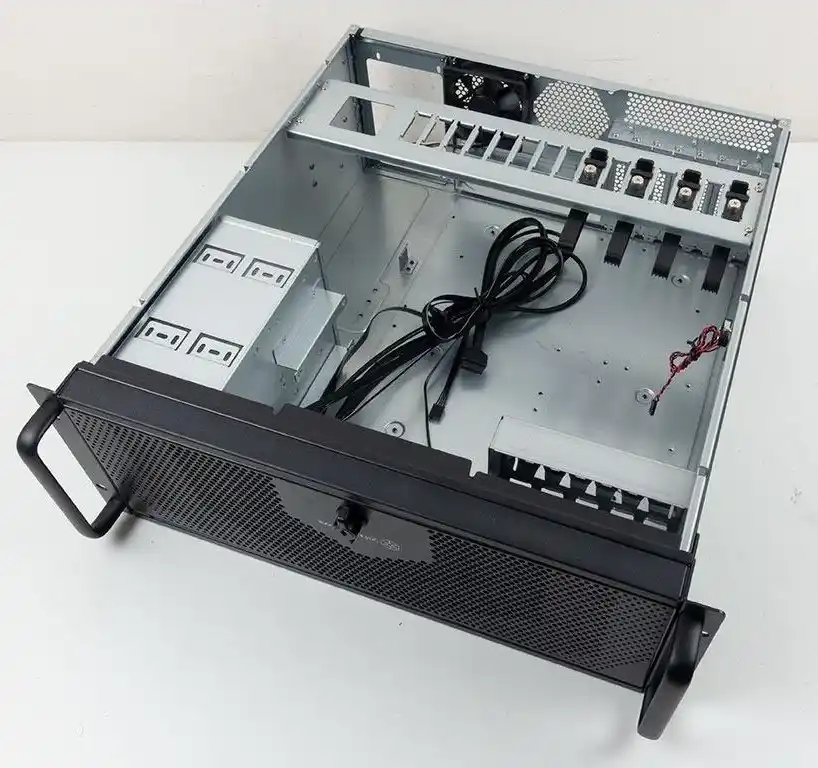
Don’t lead with specs, lead with outcomes (server chassis customer value)
Here’s the trap: you open with “1.0mm steel, 6×12038 fans, 12Gb backplane.” The buyer nods. Then they ghost you.
Start with outcomes they can feel:
- Less downtime → “You can swap drives and keep services up.”
- Faster rack-and-stack → “Your techs finish installs without fighting the cabinet.”
- Stable thermals → “No throttling when the cluster hits peak.”
- Cleaner ops → “Fewer weird failures from vibration, dust, or cable chaos.”
Then you earn the right to talk features.
A quick mental test: if your sentence doesn’t answer “what does this fix for me?”, it’s not value yet.
Use “So what?” to translate features into benefits (server pc case messaging)
Pick one feature and ask “So what?” two or three times. You’ll land on the business reason.
Example:
- Feature: tool-less side panel
So what? → tech opens it faster
So what? → faster repair
So what? → lower MTTR and fewer SLA headaches
Do that across your whole server pc case pitch, and your message suddenly sounds like ops reality, not a catalog.
Also, talk like your customer talks. They don’t say “mechanical design optimization.” They say “stop wasting my maintenance window.”
Different value for different roles (data center buyer messaging)
One chassis. Five audiences. Different “wins.”
| Buyer role | What they secretly care about | How you should say it (short, human) |
|---|---|---|
| Ops / Data center manager | MTTR, service windows, fewer surprises | “Swap parts fast. No special tools. It just work.” |
| Infra architect | PCIe lanes, thermals, future expansion | “You’ve got headroom for NICs, HBAs, GPUs, and you won’t choke airflow.” |
| Procurement | BOM stability, repeat orders, supplier risk | “Same platform, consistent parts, easier spares.” |
| Security / Compliance | physical access, tamper risk | “Lock options, controlled front access, clean audit story.” |
| MSP / Integrator | deployment speed, standardization | “Rack-and-stack is predictable. Cable routing is sane.” |
If you say the same thing to all of them, you’ll sound generic. And generic gets compared on price only. Nobody wants that.
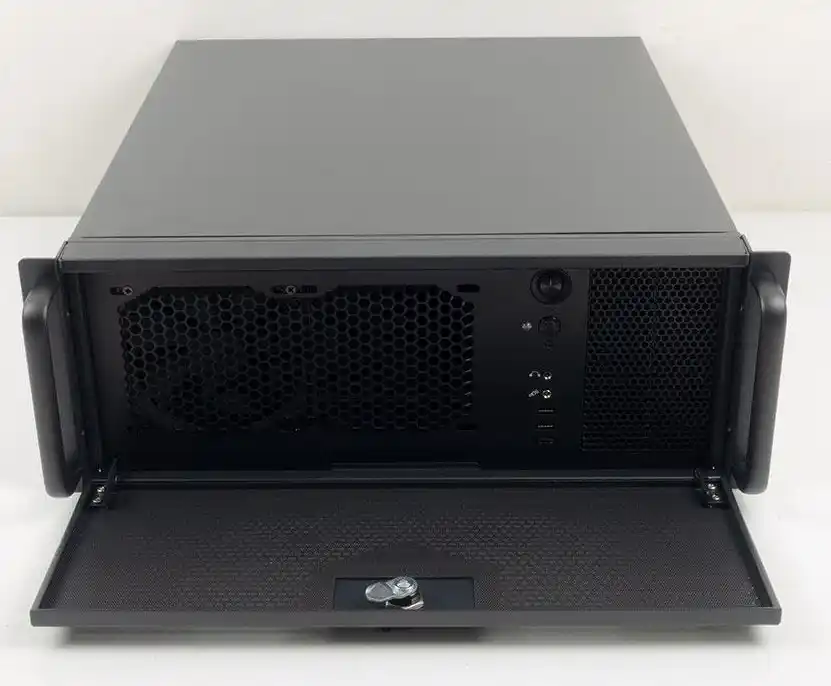
Serviceability is a core value (tool-less, hot-swap, chassis guide rail)
Serviceability isn’t “nice-to-have.” It’s uptime insurance.
Tool-free design and tool-less panels
This is where you sell speed under pressure. The 2 a.m. reality.
Value angles that land:
- “Your tech can open it in seconds.”
- “Less chance they strip screws or bend brackets.”
- “Faster swap, faster close-up, less human error.”
Not glamorous, but buyers love it.
Hot-swap bays and backplanes
Hot-swap isn’t just a bullet point. It’s the difference between “replace a drive” and “schedule downtime, notify users, pray.”
Use phrases like:
- “No maintenance drama”
- “Swap-and-go”
- “Keep the workload running while you fix hardware”
This hits storage teams, DB folks, and anyone building backup targets with a NAS Case.
Chassis guide rail: cabinet depth, load, and install day sanity
Rails are where a lot of projects quietly fail. Wrong depth. Wrong fit. Wobbly slide. Then install day turns into a circus.
A good Chassis Guide Rail story sells:
- predictable cabinet fit across mixed racks
- smoother pull-out service
- safer handling for heavier builds
You’re not selling “metal rails.” You’re selling “my techs don’t hate me.”
Thermals and airflow (server rack pc case, atx server case)
Cooling is a system. Not a fan count.
If you’re selling a server rack pc case, talk in aisle language:
- front-to-back airflow
- cold aisle / hot aisle
- pressure zones
- filter access and dust service
Front-to-back airflow and positive pressure basics
Front intake + clean mid-plane + rear exhaust. Keep it simple.
Then tie it to outcomes:
- stable clocks under load
- fewer thermal incidents
- longer fan life (less ramping)
- quieter racks (yeah, people do care)
If the buyer runs a small DC or edge room, link them straight to the atx server case angle. ATX stays popular because parts are familiar and swaps are easy. Real talk: you dont want exotic, you want predictable.
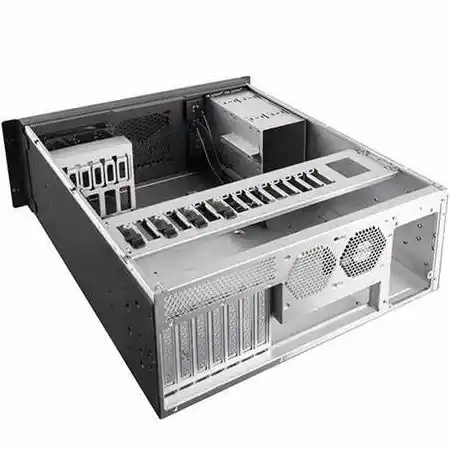
Density and expansion always trade off (rackmount, GPU server case, atx server case)
Here’s the honest truth: you can’t max everything at once. Density fights airflow. Expansion fights short-depth. Quiet fights tiny fans.
So position by workload:
- General compute, virtualization, storage nodes → Server Case
- Standard racks, lots of installs, repeatable builds → Rackmount Case
- Tight spaces, edge closets, branch rooms → Wallmount Case
- AI training, rendering, multi-accelerator builds → GPU Server Case
- Small footprint appliances → ITX Case
Also, don’t forget the required keyword language some buyers literally search:
- server pc case
- computer case server
- atx server case
- server rack pc case
- server rack pc case is often code for “I’m scaling and I need consistency, fast.”
Talk about risks and trade-offs (operations reality)
This is where you build trust. Say the quiet part out loud:
- “Higher density means tighter thermals. We should validate airflow early.”
- “More drive bays can complicate cabling. We’ll plan the cable map.”
- “GPU-heavy builds need bracing and clean exhaust lanes, or you’ll get sag and hotspots.”
When you name risks, buyers relax. They assume you’ve been burned before (because you have).
Feature-to-value table (use this in your sales deck)
| Technical feature | Customer value (what they feel) | Proof you can show (no fluff) | KPI language buyers use |
|---|---|---|---|
| Tool-less access | Faster service, fewer mistakes | install guide, panel demo video | MTTR down |
| Hot-swap bays | Replace drives without outage | backplane layout, bay count, service steps | uptime / SLA risk down |
| Redundant PSU option | Avoid single-point power failure | PSU config options, wiring map | availability up |
| Front-to-back airflow | Stable temps in hot aisle setups | fan layout, airflow direction notes | throttling down |
| PCIe slot clearance | Easy NIC/HBA/GPU upgrades | mechanical drawing, slot map | upgrade friction down |
| Dust filters / easy cleaning | Less clog, steadier airflow | filter access photos, maintenance steps | incidents down |
| Rails matched to cabinet depth | Faster rack-and-stack | rail spec + depth range | deploy time down |
| Lock / front access control | Better physical security | lock option list, access policy fit | audit pain down |
Small note: don’t promise exact savings numbers unless you’ve tested in their environment. Otherwise you’ll regret it later.
Where IStoneCase fits (OEM/ODM, bulk wholesale, custom SKUs)
If your buyers want “standard platform, consistent repeat orders,” you lean on catalog SKUs. If they want “my bezel, my I/O, my airflow target, my branding,” you go OEM/ODM.
That’s the quiet value of IStoneCase: you can start from proven chassis families, then tune what matters—thermals, bays, front panel, rails, labels, even small mechanical details that make field service smoother.
And yeah, sometimes the best value is boring:
- consistent screws across SKUs
- labeled parts so techs don’t guess
- cable points that don’t slice hands
- stable BOM so procurement stop panicking
Not poetic. Just effective.